9999 Nigehban Ramadan Package How To Get Qist Full Details 2026
9999 Nigehban Ramadan Package
9999 Nigehban Ramadan Package relief initiatives have been introduced to reduce the financial pressure on low-income households facing high inflation and rising food costs. Two separate but important support systems are operating simultaneously. One is supervised at the national level by the Government of Pakistan, while the second is implemented at the provincial level by the Government of Punjab. Both initiatives are designed to help deserving citizens manage daily expenses during the holy month without complicated procedures.
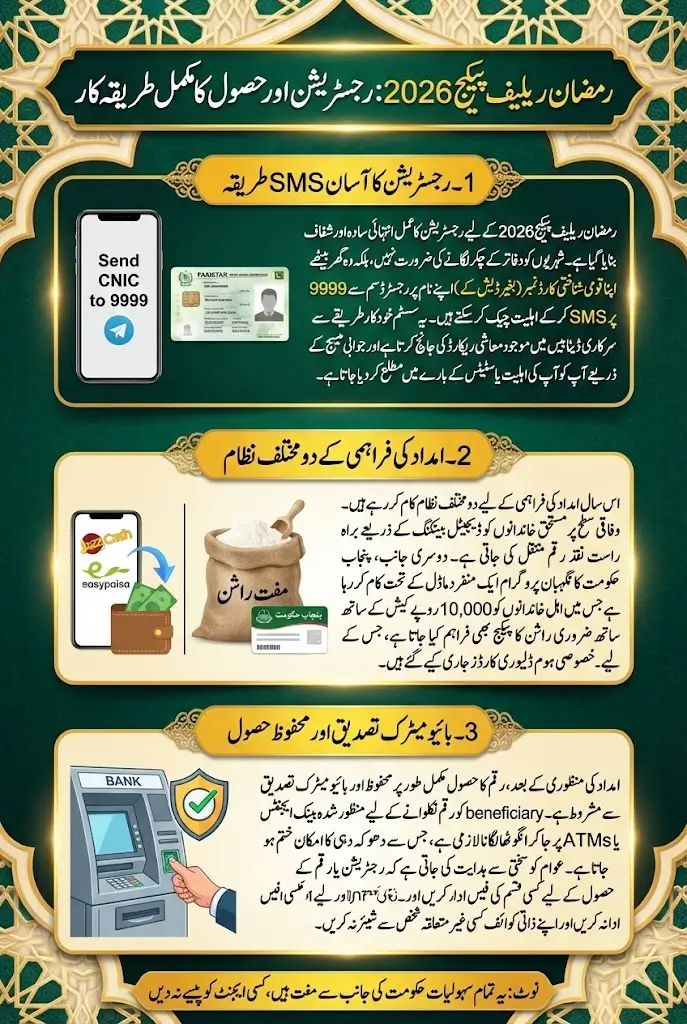
Across cities and rural areas, citizens are being guided to use a simple SMS verification process linked with official welfare databases. The intention behind this system is transparency. Instead of manual applications or recommendation letters, eligibility is decided through verified economic data. This means support is targeted toward families who truly need assistance for food, utilities, and basic living needs during Ramadan.
These programs are not charity distributions but structured government welfare measures. Payments are processed digitally or through secure biometric systems so that funds reach the correct household. The approach reduces middlemen involvement and minimizes chances of corruption or deduction.
You Can Also Read: Pm Ramzan Relief Package Portal
How the Two Ramadan Support Systems Operate Differently
Although both relief systems aim to support financially struggling families, their operational structure and delivery method differ. One system provides nationwide direct cash support, while the Punjab-based initiative combines financial aid with essential food assistance.
The national program focuses primarily on quick digital cash distribution using verified CNIC data. In contrast, the Punjab initiative introduces a physical support card and ration distribution system, which ensures families receive both money and essential food supplies during Ramadan.
For many citizens, understanding this distinction is important because eligibility and payment methods vary depending on geographic location and registration status. Residents of Punjab may benefit from both financial support and ration coverage, while residents of other provinces primarily receive direct cash assistance if approved.
CNIC Verification Process Through Official SMS Registration
The verification process begins with identity confirmation using a citizen’s Computerized National Identity Card number. Applicants must send their CNIC through SMS using a SIM card registered under their own identity. This requirement ensures accurate matching of personal and welfare data.
After sending the CNIC number, the system reviews socio-economic records stored in official databases. These records include income level, asset ownership, electricity consumption, and poverty score indicators. The verification process usually takes place automatically without requiring physical office visits unless further review is needed.
Applicants typically receive a response message explaining their status. Some households are immediately approved based on existing records, while others may be placed under verification if additional data confirmation is required.
Key points citizens must follow during verification:
- Send CNIC without spaces or dashes
- Use only a SIM registered on your CNIC
- Wait for official confirmation message
- Avoid resending repeatedly within short time
- Follow instructions provided in reply SMS
This structured verification system helps authorities maintain fairness and ensure benefits are distributed based on actual economic need.
How Financial Assistance Is Transferred After Approval
Once eligibility is confirmed, financial assistance is transferred through secure and traceable channels. The federal support system relies on digital financial platforms to deliver funds quickly and safely to beneficiaries.
Most approved applicants receive payment through mobile financial services such as JazzCash or EasyPaisa. Beneficiaries receive an SMS notification confirming that funds have been deposited into their wallet account. The message also guides them on how to withdraw money using biometric verification.
This digital method reduces long queues and eliminates the need for physical cash distribution centers. It also ensures transparency because every transaction is recorded electronically. Beneficiaries can withdraw their money from authorized agents located across Pakistan.
Important characteristics of digital payment transfer:
- Funds are transferred only after official approval
- Biometric thumb verification is required for withdrawal
- Payment is one-time Ramadan support
- No deduction or service fee is charged
- Beneficiary must be physically present for withdrawal
Punjab Ramadan Support With Cash and Essential Ration
The Punjab-based Ramadan support system focuses on stabilizing household consumption during the holy month. Instead of only providing cash, the initiative ensures families also receive essential food items to reduce kitchen expenses.
Eligible families receive financial support of Rs 10,000 along with ration coverage. The program prioritizes households already registered in provincial socio-economic records. By combining cash assistance with food distribution, the initiative directly addresses both purchasing power and food security concerns.
The structure of the Punjab support model reflects field-level challenges observed by authorities. Many low-income households struggle not only with money but also with access to basic food supplies during Ramadan. Therefore, this dual-benefit system provides more comprehensive support compared to cash-only assistance.
Key components of Punjab relief assistance:
- One-time cash support for household expenses
- Essential ration package for Ramadan month
- Physical support card issued to eligible families
- Distribution monitored by district administration
- Transparent delivery at registered addresses
Card Delivery and Household Confirmation Procedure
Eligible families in Punjab receive a physical assistance card delivered by local administrative teams. This door-to-door delivery approach is designed to prevent unauthorized collection and maintain transparency.
Field implementation shows that local authorities verify household identity before handing over the card. This ensures that assistance reaches the intended family and prevents misuse by third parties. Citizens are advised to remain available at their registered address and keep original identification documents ready during the distribution period.
If a household is not present during delivery, follow-up verification may be scheduled. Therefore, keeping contact information updated in welfare records is essential for timely receipt of assistance.
Procedure For Families Not Found In Welfare Records
Some applicants receive notification that their data is unavailable in official records. This situation typically occurs when household information has not been updated in the socio-economic registry.
Families in this category must complete the socio-economic survey process. The survey collects detailed information about income, family size, employment status, and living conditions. After submission, authorities reassess eligibility based on updated information.
Reasons households may not appear in database:
- Previous survey never completed
- Household income recently changed
- Migration or address change not updated
- SIM not linked to CNIC properly
Completing the survey ensures accurate representation of household economic conditions and increases the chances of eligibility review.
Approved Channels For Secure Cash Withdrawal
After receiving approval or assistance card, beneficiaries can withdraw funds through authorized financial networks operating nationwide. Biometric verification remains mandatory to confirm identity and prevent fraud.
| Withdrawal Facility | Method of Access |
|---|---|
| Bank of Punjab ATM | Card with biometric verification |
| 1-Link ATM Network | Interbank card withdrawal |
| HBL Konnect Agent | Assisted biometric withdrawal |
| UBL Omni Retailer | Biometric cash service |
These secure withdrawal systems ensure beneficiaries receive the full amount without deductions or unauthorized handling.
Economic Criteria Used To Identify Deserving Households
Eligibility is determined using data-driven socio-economic indicators rather than manual selection. Authorities analyze household income, asset ownership, and poverty score data stored in welfare databases to identify families most in need.
The objective is to ensure fairness by directing assistance toward households facing genuine financial hardship. This method also prevents duplication of benefits and ensures efficient use of public resources.
Indicators commonly used in eligibility assessment:
- Monthly household income within defined threshold
- Poverty score within approved range
- Limited ownership of valuable assets
- Absence of significant tax record
- Verified residency and household size
Households That Do Not Qualify For Ramadan Relief
Certain categories are excluded based on economic stability indicators. These restrictions ensure resources are allocated to families experiencing financial vulnerability rather than those with stable income sources.
Disqualification conditions generally include:
- Government employment status
- Registered income tax filer
- Ownership of high-value property or business
- High electricity consumption patterns
- Strong financial transaction record
These indicators collectively suggest financial capacity and therefore disqualify applicants from assistance.
Public Awareness Measures To Prevent Fraud And Exploitation
Authorities have emphasized that all official procedures begin only through SMS verification. No registration fee, agent charge, or service cost is required at any stage of the process.
Citizens are strongly advised to protect their personal information and avoid sharing CNIC copies or OTP codes with unauthorized individuals. Fraud attempts often target vulnerable households through fake messages or calls promising guaranteed approval.
Essential safety practices for beneficiaries:
- Use only official SMS codes for verification
- Never pay money for registration or approval
- Do not share CNIC images on social media
- Confirm information through official announcements
- Withdraw funds personally using biometric verification
Socio-Economic Purpose Behind Ramadan Relief 2026
The introduction of Ramadan relief initiatives reflects broader economic challenges affecting daily life across Pakistan. Rising food prices and inflation have increased household expenditure, particularly during Ramadan when consumption naturally rises.
These programs aim to provide temporary financial stability, protect food security, and support vulnerable families during a spiritually significant month. By delivering targeted assistance through verified systems, authorities seek to reduce economic stress and improve household resilience.
Final Practical
The complete process follows a clear sequence that citizens should understand carefully. First, verify eligibility through SMS. Second, wait for confirmation and follow official instructions. Third, receive payment digitally or through an assistance card. Finally, withdraw funds using biometric verification from authorized channels.
Citizens who follow official procedures, keep their records updated, and avoid unauthorized agents can receive Ramadan assistance safely and without deductions. The system is designed to be simple, transparent, and accessible so that deserving families across Pakistan can benefit from financial relief during Ramadan 2026