Pm Ramzan Relief Package Portal To Check Status Using CNIC Full Guide 2026
Pm Ramzan Relief Package Portal
Pm Ramzan Relief Package Portal has become an important lifeline for millions of low-income families across Pakistan. Every year during Ramadan, food prices rise sharply, and many households struggle to manage daily expenses. This year, however, the government has designed a fully digital, transparent, and highly structured system to help citizens check their eligibility and receive support without facing long queues, agents, or complicated paperwork.
Through my reporting on welfare systems over the years, I’ve seen how digital programs have gradually replaced old manual methods. Citizens, especially those living in far-flung areas, now prefer CNIC-based systems because they provide clarity, quick verification, and dignity.
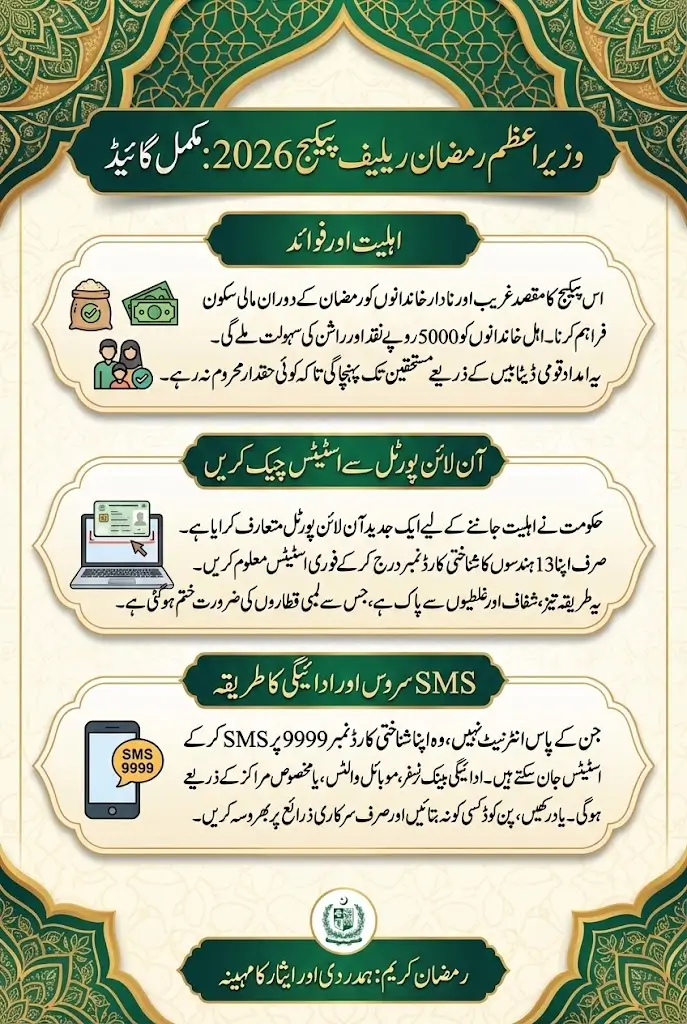
The Ramzan Relief Package aims to provide financial comfort during the holy month by offering cash assistance and ration support. This guide explains every detail: how to check your status using your CNIC, how the SMS system works, who is eligible, and how payments will be delivered in 2026.
Understanding the PM Ramzan Relief Package 2026
The government launched this package to reduce economic pressure on poor and vulnerable groups during Ramadan. Over the years, people complained about middlemen, delayed payments, and duplicate registrations. To resolve these issues, the 2026 system is built on national data verification. It ensures that only those who genuinely deserve support are selected.
This program is especially important right now because inflation has made basic groceries expensive, and many families cannot afford essential Sehri and Iftar items. By offering direct cash and ration support, the government hopes to ease the burden on families who live paycheck to paycheck or rely on daily wages.
The package includes several expected benefits:
- Direct cash assistance (expected around Rs. 5,000)
- Ration support through official utility stores
- Digital verification and quick approval
- No involvement of agents
- Simple CNIC-based checking method
Main Objectives Behind the Relief Program
During field visits to low-income neighborhoods, I found that families face the toughest financial strain in Ramadan. The government designed this program to provide stability and reduce their reliance on borrowing or cutting meals. The primary objective is to help households manage essential food expenses without compromising dignity.
Another key goal is fairness. In previous programs, beneficiaries often reported favoritism and unfair selection. This time, every application is verified through national socio-economic databases, ensuring only eligible individuals receive assistance.
The government’s official objectives include:
- Reducing Ramadan-related grocery burden
- Delivering targeted relief to low-income households
- Using data to ensure fair and unbiased selection
- Improving transparency and eliminating manual errors
Eligibility Criteria for the Ramzan Relief Package
Eligibility is determined strictly through government records. Families that fall under low-income brackets or are already registered with welfare databases have a higher chance of approval. Through conversations with local welfare officers, I learned that many applications fail because of outdated information or incorrect mobile numbers.
To avoid rejection, families must ensure that their CNIC details, mobile numbers, and household information are updated in government systems. Applicants from rural areas, daily wage earners, and widows are among the strongest priority groups under this package.
Priority categories include:
- Low-income families listed in welfare data
- Widows and single mothers managing households
- Persons with disabilities
- Senior citizens and daily wage workers
- Households already registered with welfare databases
How to Check Your Relief Status Through the CNIC Portal
The government plans to activate the official CNIC verification portal before Ramadan. This portal is designed for citizens who want a fast, clear, and mistake-free way to check their status. I have used similar portals in previous government programs, and their interface is usually very simple.
Applicants will enter their 13-digit CNIC number and receive an instant response regarding eligibility. The portal reduces errors, prevents multiple applications from the same CNIC, and displays real-time status updates. This method is especially helpful for young applicants who prefer online processes over SMS.
Steps to use the portal:
- Visit the official Ramzan Relief Package website when it is launched
- Enter your CNIC number without dashes
- Submit the form and wait for the automated response
- Follow further instructions if you qualify
PIN Generation for the Ramadan Nigehban Card
The Ramadan Nigehban Card is expected to play an important role in distributing financial support. For security reasons, every cardholder must generate a PIN before receiving funds. The PIN protects the card from misuse and ensures that only the rightful beneficiary can claim the payment.
Authorities have stressed that people should not share this PIN with anyone, not even relatives, because misuse is common in densely populated areas. The PIN activation process is digital, and applicants may complete it through the government portal or dedicated service centers.
Guidelines for PIN creation:
- Use your personal CNIC and registered mobile number
- Follow step-by-step instructions shown on the portal
- Do not disclose your PIN to any agent or unknown person
- Keep your card and PIN stored safely
How to Register Through SMS (Service 9999)
For people without internet access, the SMS method remains the simplest option. During my field reporting in rural Punjab and interior Sindh, I met families who primarily depend on SMS-based systems because smartphones are not common in those areas.
SMS registration only requires a single message. After sending the CNIC number to 9999, applicants receive a response within one to three days. The system automatically verifies CNIC details based on national databases and informs applicants whether they qualify or not.
SMS application steps:
- Open the SMS app on your phone
- Type your 13-digit CNIC number
- Send it to 9999
- Wait for confirmation within 24–72 hours
Expected Relief Amount and Distribution Channels
The government aims to provide both cash assistance and ration support based on district-level needs. Some districts may receive food items through utility stores, while others may receive cash directly into their account or mobile wallets.
To ensure clarity, the following table explains the expected assistance for 2026. This is based on the information gathered from ongoing government briefings and past relief programs
Expected Relief Support 2026
| Support Type | Expected Amount | Mode of Delivery |
|---|---|---|
| Cash Support | Rs. 5,000 (expected) | Bank Transfer, Mobile Wallet, Payment Centers |
| Ration Support | Limited districts | Utility Stores / Local Distribution Points |
Beneficiaries must carry their original CNIC during collection. Expired or photocopied CNICs are not accepted at payment centers.
How Beneficiaries Will Receive Payment
Historically, most beneficiaries prefer mobile wallet transfers because they are quick and require no travel. However, some people still prefer physical centers due to familiarity. Payment channels include bank transfers, mobile wallets, and in some regions, designated distribution halls.
I have visited these payment centers during several government relief drives. The process is generally well-organized, and most complaints arise only when people forget their original CNIC or provide incorrect mobile numbers. The digital system verifies details immediately, so accuracy is important.
Beneficiaries can receive payments through:
- Bank accounts linked with CNIC
- Mobile wallets like JazzCash or Easypaisa
- Government-authorized payment centers
- Utility store-linked ration distribution counters
Important Instructions for All Applicants
Every year, many people lose their chance simply because they trust agents, share private information, or apply through fake websites. The government has once again warned the public to follow only official channels.
From my interactions with applicants, I noticed that most mistakes come from lack of information. Some people even send their CNIC repeatedly, thinking it will speed up the process. This only increases system congestion and does not help the applicant.
Important guidelines:
- Do not share CNIC with strangers
- No registration fee is required
- Avoid unofficial links circulating on social media
- Keep your registered mobile number active
- Report complaints to the nearest Union Council office
Why Digital Verification Matters in 2026
Older manual systems created several problems such as duplicate registrations, favoritism, and lost records. The 2026 digital verification system aims to fix all these issues by using national data, CNIC filters, and fraud detection tools.
This shift to digital systems has already transformed several welfare initiatives in the past few years. Citizens now receive results faster, and fewer complaints are recorded. Digital screening also ensures that people who do not qualify cannot enter the system through influence or connections.
Digital verification benefits:
- Blocks duplicate and fake entries
- Ensures fairness
- Reduces fraud
- Provides faster results
- Enhances overall transparency
How the Package Supports Families During Ramadan
Ramadan expenses can be overwhelming for many families, especially those relying on daily wages. When I spoke with several households last year, they shared how even a small amount of financial support makes a big difference during this month.
The relief package ensures families can afford essential groceries for Sehri and Iftar without falling into debt. It also helps those supporting large families or caring for elderly parents, who often require extra food and medicine during Ramadan.
Household benefits include:
- Stable meals during Sehri and Iftar
- Less dependency on loans
- Improved food security
- Emotional and financial peace for families
Common Application Mistakes to Avoid
The most common mistakes applicants make include using someone else’s SIM, entering CNIC with dashes, and trying to register multiple times. These small errors often lead to automatic rejection.
Applicants should carefully follow the instructions and verify all details before applying. Updating CNIC and phone information in official databases can significantly increase approval chances.
Frequent mistakes:
- Using CNIC number with dashes
- Sending SMS from a SIM not registered under your CNIC
- Applying through fake websites
- Sending multiple SMS repeatedly
- Providing incorrect household details
Latest 2026 Updates
Government teams are preparing the online portal, upgrading SMS servers, and finalizing district-level ration distribution points. The final notification will include the exact launch date, eligibility criteria, and payment schedule.
Applicants are advised to stay updated through official channels only. Unofficial pages often spread false information, leading to confusion among citizens.
Expected announcements:
- Portal launch date
- Updated verification rules
- Confirmed relief amount
- District-wise distribution schedule
Final Words
The PM Ramzan Relief Package 2026 is a well-structured and transparent support program that aims to help deserving families during the holy month. The CNIC-based portal and SMS methods make the application process simple, reliable, and corruption-free. As someone who has covered similar programs for years, I can confidently say that this digital shift brings ease, dignity, and clarity for applicants nationwide.
By following official steps, avoiding misinformation, and using accurate details, families can ensure they receive their rightful assistance on time. The true purpose of Ramadan is compassion and support, and this package reflects that spirit.